A curated walk through the best art-portfolio, journal, and store websites — so you can point at the look you love, and we build yours to match.
1. Tap every “Visit ↗” and browse the real site. 2. On each card tap ♥ Love it, ≈ So-so, or ✕ Not for me — your choices save automatically. 3. Hit “Copy” in the bar at the bottom and send us your picks — that sets the look of your site.
From the mood boards you sent: rich, warm and opulent — deep oxblood red, burnt orange, antique gold, chocolate and forest green, with animal-print and velvet textures. Bold and glamorous, not minimal. This whole page now wears those colors — and your finished site will too.
“This is kind of my style.”
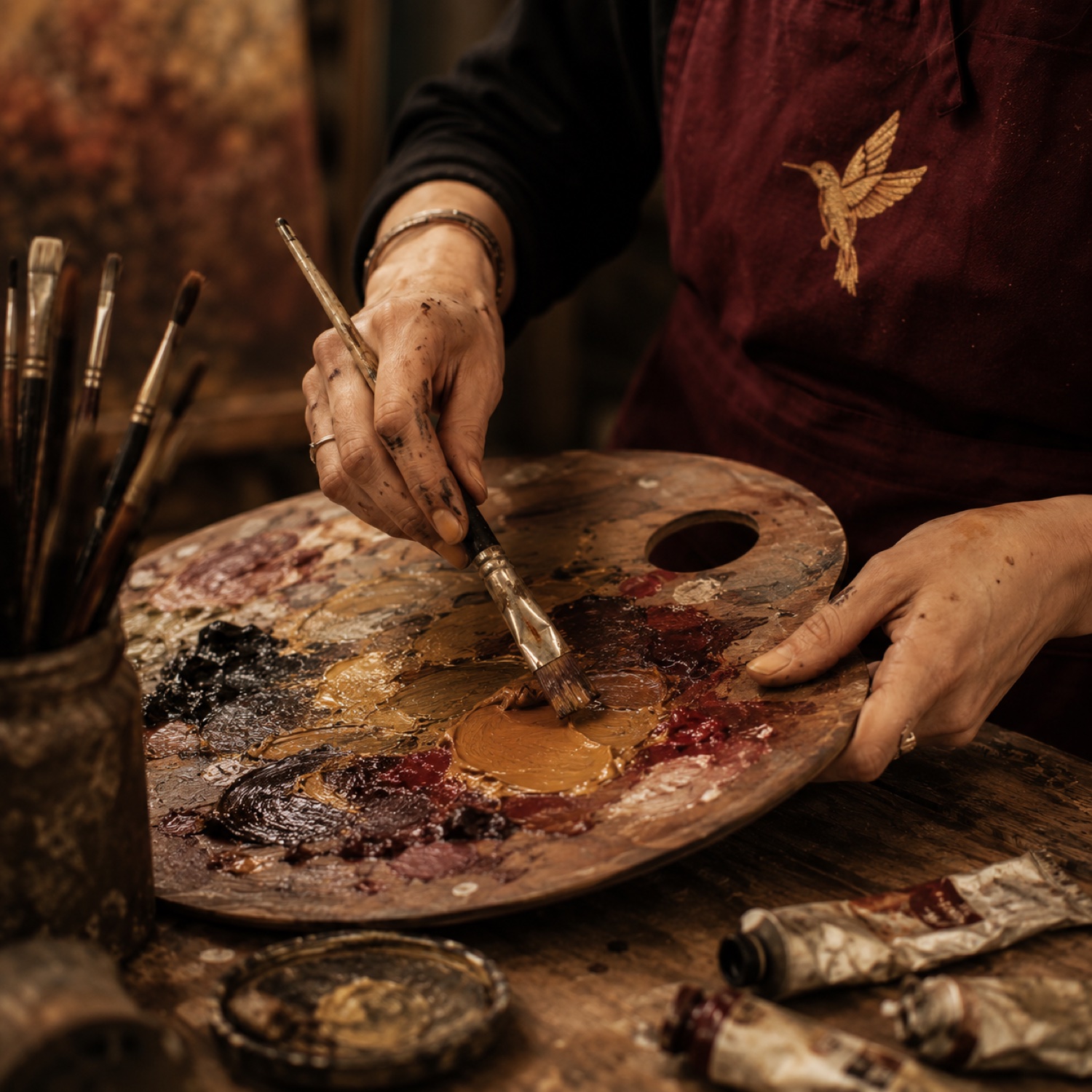
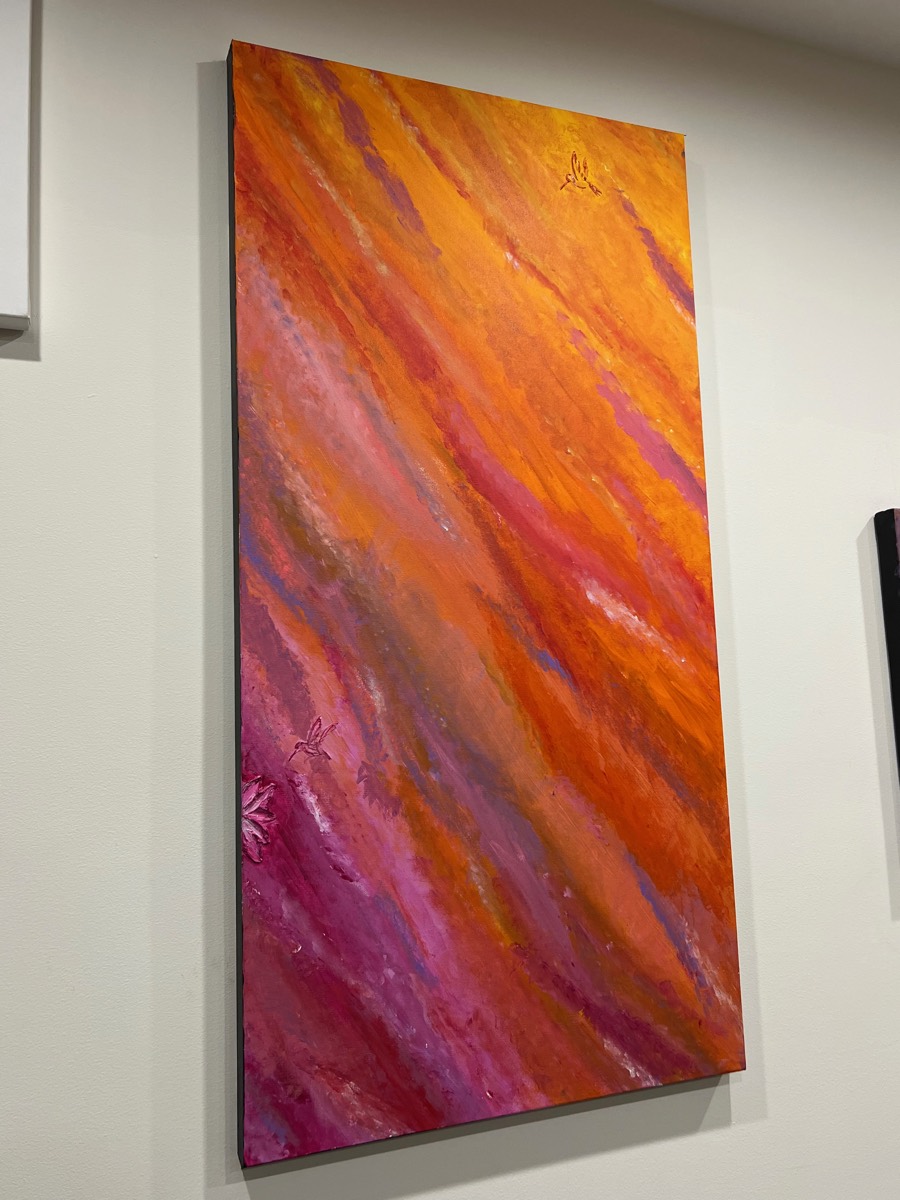
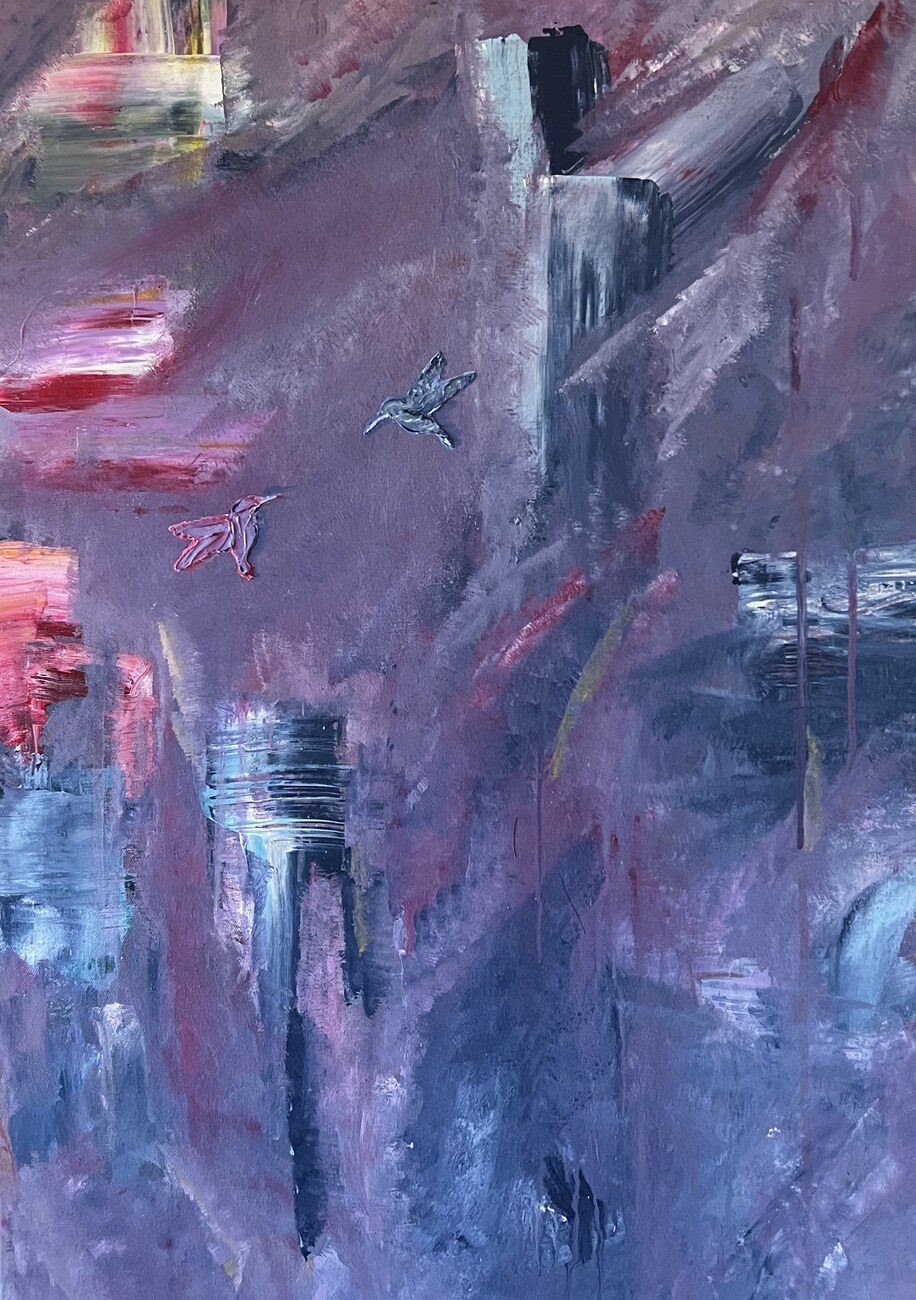
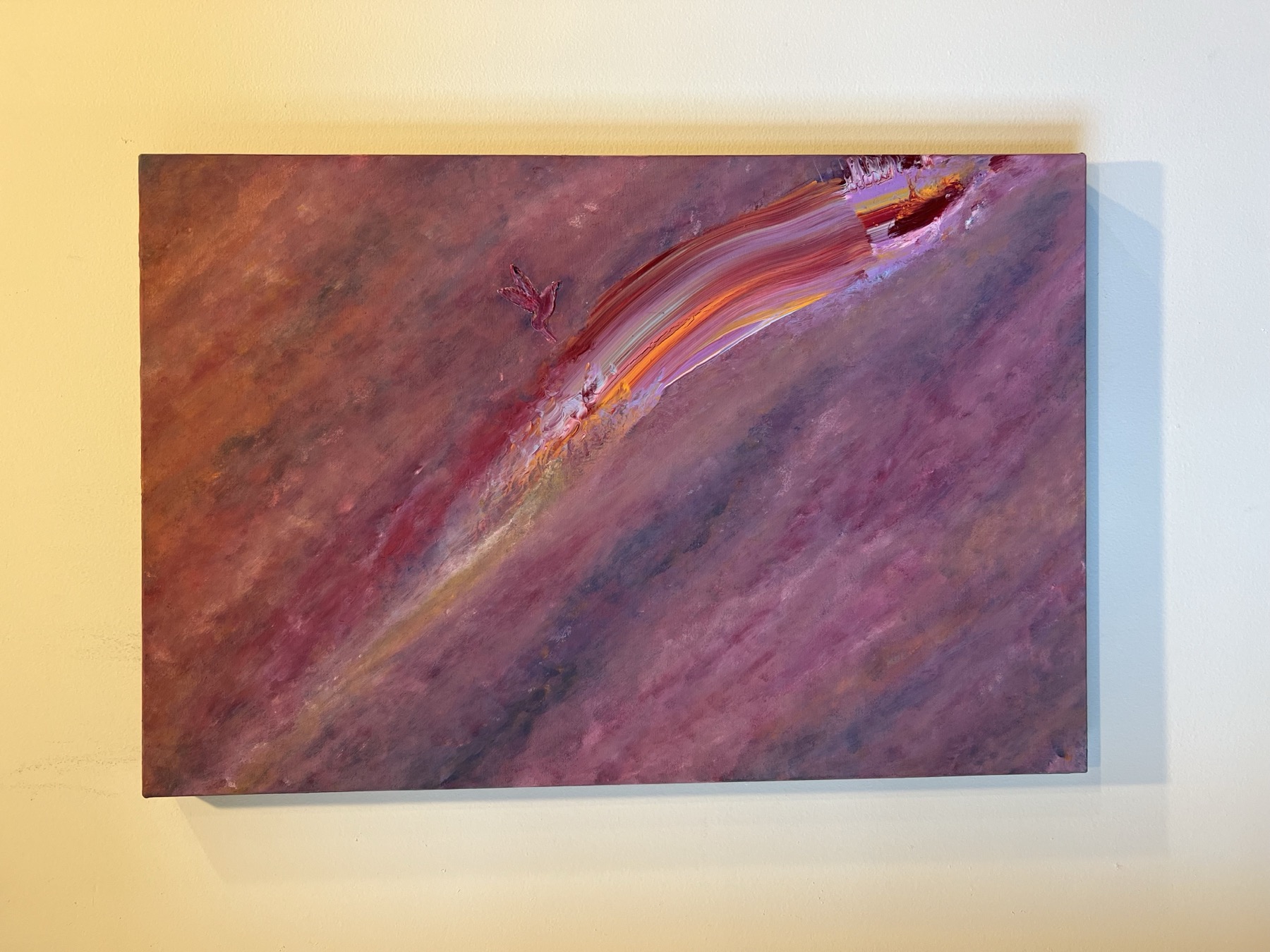
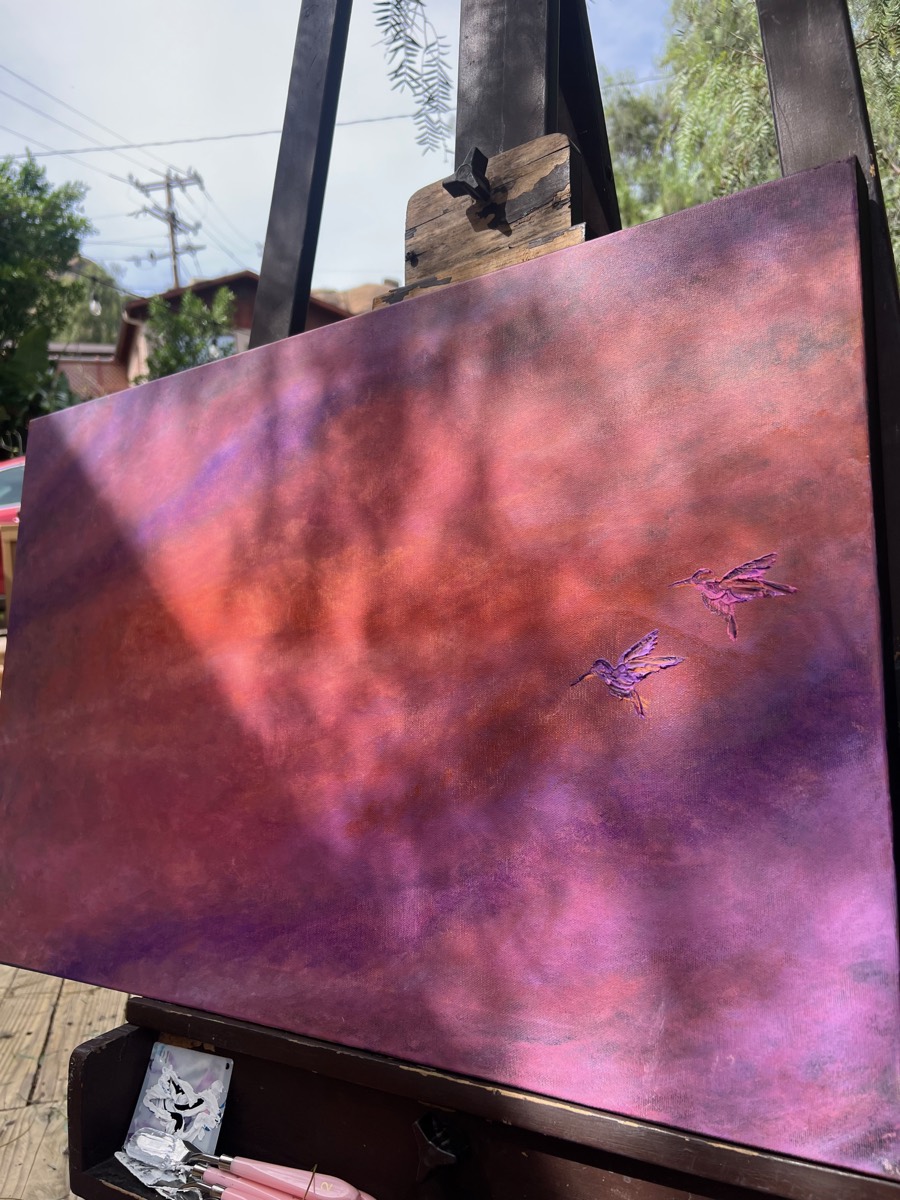
Deep, dramatic and tactile — the same heat as your hummingbird paintings, dressed in oxblood and gold, with the hummingbird shining gold against the dark. Your Red Inferno (#4E0000) is the signature.
These are individual painters running their own site, exactly like yours will be. Look at how they organize art, blog, and selling — and how personal they feel.
Why it works: Radically simple. A five-word menu (Artwork / Shop / Blog / About / Contact), lots of white space, and color pulled straight from her paintings. Her blog is a clean dated list — no clutter.
Why it works: Restrained layout, a small circular logo, a warm artist-portrait hero, and a neutral palette that makes her colorful florals pop. The shop is a tidy filterable grid (Prints / Apparel / etc.).
Why it works: The gallery IS the shop — each painting shows its title and price, “Sold” flags create real scarcity, and tiered pricing (originals → prints → “Pay What You Can”) gives every visitor a way in.
Why it works: The site’s colors match her paintings — the brand bleeds off the canvas onto the screen. Big hero imagery, and a blog with featured images + visual category cards that feel curated, not like a directory.
Why it works: Reads like a beautiful magazine — commerce-heavy but still feels like a gallery. Her journal is genuinely active, with work-in-progress photos and life-themed categories that build a loyal readership.
Why it works: The closest tech match to what we’ll build for you. A working-studio diary blog (exhibitions, collector stories), high-res paintings with prices and a cart, every offering named in the menu.
These are big galleries and respected art blogs. You won’t need all their machinery — but each has one or two ideas worth stealing for a simple personal site.
Why it works: Themed editorial collections on the homepage, price shown above each title (buyer-first), and clickable price brackets (Under $500 / $500–1k…) that make shopping effortless.
Why it works: The most buyer-friendly filters anywhere — including size by your wall dimensions — and artist profiles front-and-center with stats and reviews as social proof.
Why it works: Editorial and shopping carry equal weight — “handpicked by our curator” framing turns browsing into discovery, not just shopping.
Why it works: Sells by mood, not category — “Works for quiet rooms,” “Bold statement pieces.” Installment options and free-returns are shown right on the product, removing hesitation.
Why it works: Paintings shown hung in real rooms — buyers picture the art in their home before they see it as a product. Story-based testimonials woven through.
Why it works: Theme-first homepage, named collections each with a one-line story, and a soft “make an offer / message me” path that opens a door for hesitant buyers.
Why it works: The gold standard for an art blog. A single clean column with full-width images stacked top to bottom — a gallery experience inside a post, no plugin needed.
Why it works: Minimal, image-led, with all-caps badges (“ARTIST SPOTLIGHT”) above each post and the artist’s own words pulled into an italic block — small touches that feel like a real publication.
The art needs room to breathe. The page stays quiet; the paintings provide all the color.
Selling sites show the price. Hiding it reads as “gallery,” not “store.”
A painting with a price is both portfolio and product — one click from admiring to owning.
Process and story — not “look at my new thing” — is what turns followers into collectors.
Work · Shop · Journal · About · Contact. More than that creates decision paralysis.
“Works for quiet rooms” invites you in; “Paintings > Landscape” just files things away.